The 2025 Gold Cup: Soccer Revolution Sweeping North America
The 2025 CONCACAF Gold Cup arrives at a turning point in the evolution of North American soccer. From June 14 through July 6, 16 national teams will compete across 14 venues in the United States and Canada. But this edition is not merely about who lifts the trophy at NRG Stadium in Houston.
Instead, it marks the ignition of something greater—a sweeping transformation of soccer in the CONCACAF region, particularly in the U.S., Mexico, and Canada.
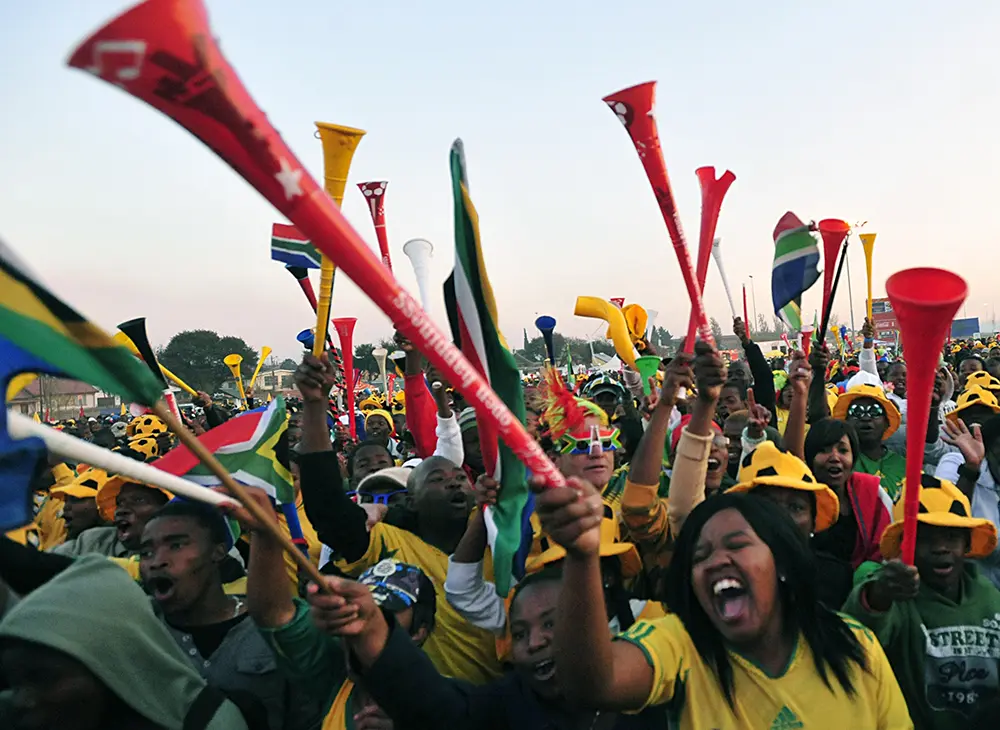
In many ways, this tournament is the curtain-raiser to a golden era for North American football. With the expanded 48-team 2026 FIFA World Cup on the horizon and the 2025 FIFA Club World Cup set to bring the world’s best clubs to American soil, the 2025 Gold Cup finds itself uniquely positioned. It is more than a continental competition.
It is a cultural moment, a competitive barometer, and a platform to test readiness on and off the field. Add to this the rising intensity of the domestic game—Major League Soccer’s (MLS) ongoing season, Liga MX’s continued dominance, and Canada’s evolving football infrastructure—and the Gold Cup begins to look like a necessary focal point for everything football-related in the region.
A Tournament Reimagined
More Than Just Continental Glory
For decades, the Gold Cup has been CONCACAF’s flagship event, historically dominated by regional giants: Mexico, the United States, and Canada. Yet in 2025, the competition feels significantly more meaningful. It functions as a rehearsal for global tournaments to come, but also as a stand-alone moment of reflection on how far the region has come.
The group stage for this year’s tournament features four competitive brackets, with Mexico, the U.S., and Canada each heading their respective groups. Unlike previous years, the tournament hosts Canada as a full co-participant, with matches played at BC Place in Vancouver. This shared hosting arrangement mirrors the upcoming World Cup model, reinforcing the collaborative infrastructure between North American footballing bodies.
Mexico enters the competition as the defending champion, having won both the 2023 Gold Cup and the 2024–25 CONCACAF Nations League. Their dominance has never been in doubt, but the demands of the international calendar are taking their toll.
The upcoming Club World Cup and growing expectations around World Cup 2026 place additional pressure on squad rotation, performance consistency, and fan expectations. Yet their lineup still includes a rich blend of experience and youth. With standout players such as Santiago Giménez and Uriel Antuna rising to prominence, Mexico remains a formidable contender.
Canada, on the other hand, is experiencing a revival long in the making. Since their surprise qualification and spirited showing at the 2022 World Cup in Qatar, the Canadian national team has been on an upward trajectory. Although star player Alphonso Davies is absent from this tournament, head coach Jesse Marsch has emphasized team cohesion, tactical identity, and youth integration.
With Jonathan David leading the front line and promising talents from the Canadian Premier League and Europe filling the ranks, Canada is no longer a fringe competitor—they’re legitimate contenders.
The United States brings an intriguing dynamic to this year’s tournament. With the World Cup less than a year away, the Gold Cup is both a proving ground and a puzzle. The roster lacks many of its marquee names due to injury or rest, including Christian Pulisic, Weston McKennie, Gio Reyna, and others. Still, the team features a new generation of players hungry to stake their claim.
In many ways, this U.S. squad embodies the broader transformation of American soccer: deeper, younger, and more technical. The Gold Cup serves as a rare opportunity to gauge the second tier of the national team program—crucial for depth building ahead of 2026.
MLS, Liga MX, and Canada’s Football Blueprint
The significance of this Gold Cup cannot be understood in isolation from the domestic leagues that feed these national teams. In the U.S., Major League Soccer is currently in full flow. As the 2025 MLS season progresses toward its summer peak, fans and players alike are immersed in a league that has matured dramatically over the last decade.
No longer a retirement league for aging stars, MLS has become a vibrant, talent-producing ecosystem. Young American players are increasingly being scouted and signed by top European clubs, while international stars, like Lionel Messi, Sergio Busquets, and Luis Suárez, are using the league as a springboard for expanding the sport’s cultural footprint in the U.S.
The Apple TV broadcast deal has revolutionized accessibility, bringing MLS into millions of homes globally, and the league’s expansion into cities like St. Louis and San Diego illustrates its ever-growing reach.
Liga MX remains the most commercially potent league in North America. Its clubs consistently dominate in terms of regional trophies and financial power. However, Liga MX is not static. The league is undergoing a transformation aimed at aligning more closely with international standards.
Youth academies are being restructured, and club licensing reforms are pushing for higher standards. Its involvement in the Leagues Cup, alongside MLS clubs, provides an annual competitive crossover that keeps both leagues sharp and cross-pollinates fanbases.
Canada’s domestic football story is still being written. Since launching the Canadian Premier League (CPL) in 2019, the country has established a professional pathway for local talent. In 2025, that vision takes a leap forward with the introduction of the Canada Superleague. This newly structured national league aims to unite footballing interests from coast to coast, offering a broader and more sustainable ecosystem.
It seeks not just to feed talent into the national team, but also to cultivate a soccer culture in a traditionally hockey-centric nation.
What binds these leagues together is a growing confidence. They are not just building for their own success, but for a more unified, competitive North American football identity. Their success fuels the national teams, and by extension, tournaments like the Gold Cup. With MLS in full swing, Liga MX in continuous evolution, and Canada developing critical league infrastructure, the Gold Cup becomes a convergence point—an arena where the fruits of domestic labour are tested on the international stage.
FIFA Club World Cup, World Cup 2026, and the Maturation of the Region
While the 2025 Gold Cup rightly commands attention, it is also just one chapter in a larger narrative unfolding across North American soccer. Next summer, the United States will host the first-ever expanded FIFA Club World Cup. This tournament brings 32 of the world’s top clubs to U.S. soil, including champions from every continent. European giants like Manchester City, Bayern Munich, and Real Madrid will compete in the same cities that will later host World Cup matches.
This new format offers an unmatched opportunity for American and Mexican clubs to test themselves against the best in the world. For MLS clubs like LAFC, Inter Miami, or Seattle Sounders, it’s a chance to validate their progress on a global stage.
For Liga MX powerhouses like Club América or Tigres, it represents a path back to international glory. But beyond the competition itself, the Club World Cup functions as a dress rehearsal for the logistical, media, and fan experience elements critical to hosting a successful World Cup in 2026.
And what a World Cup it promises to be. With 48 teams participating, spread across more host cities than ever before, the 2026 FIFA World Cup will be the largest and most ambitious iteration of the tournament in history. North America isn’t just hosting—it’s declaring itself as a new power center in global soccer. From ticketing systems to training facilities, from community outreach to tourism integration, the region is preparing to welcome the world.
But this future depends on more than just tournaments. It depends on people—players, coaches, referees, and fans—having access to education, tools, and inspiration. Which brings us to a less flashy, but equally vital component of this regional soccer boom: coach education.
Coaching Education
Driver of Long-Term Soccer Growth
As the infrastructure of soccer grows across the U.S., Mexico, and Canada, so too does the need for qualified, innovative coaches. It’s not enough to build stadiums or expand leagues. Developing the next generation of players starts at the grassroots, and that begins with coach development.
Online platforms have revolutionized how coaching education is delivered. One such platform—The International Soccer Science & Performance Federation (ISSPF)—has become a cornerstone in this evolving landscape. Offering a range of online certifications and masterclasses on topics like tactical periodization, strength & conditioning, player development, and performance analysis, ISSPF is equipping coaches from all levels with the latest in football science and strategy.
In the U.S. especially, where soccer has historically lacked the cultural embedding of sports like football or basketball, digital learning platforms are filling the gap. Thousands of youth, high school, college, and club-level coaches are turning to ISSPF courses to enhance their understanding of the game, improve player outcomes, and align their methodologies with global best practices.
The accessibility of ISSPF’s online courses democratizes knowledge. No longer do coaches need to fly to Europe or pay thousands of dollars to gain elite-level insights. These tools are now at their fingertips—an internet connection away from transforming how soccer is taught and played in towns and cities across North America.
CONCACAF, too, has begun to emphasize education more seriously. Coaching licenses are being streamlined. Performance analytics are more widely adopted. And international collaboration between federations is becoming the norm. This ecosystem of knowledge is as important as any stadium or tournament. After all, today’s Gold Cup star often begins their journey under the watchful eye of a well-trained, passionate youth coach.
As the 2025 Gold Cup unfolds in packed stadiums from Vancouver to Houston, it is tempting to view it as just another trophy chase. But in truth, this tournament is a launchpad. It is a glimpse into a region that is finally discovering its soccer identity—not by imitation, but by innovation.
The U.S., Mexico, and Canada each bring unique histories and trajectories, yet they are increasingly unified by shared ambition. MLS is thriving in mid-season. Liga MX is adapting and asserting itself. Canada is building from the ground up. Youth academies are maturing. Fans are engaged like never before. And thanks to online platforms like ISSPF, even coaching education is no longer a bottleneck, but a pipeline of possibility.
The 2025 Gold Cup may not crown the best team in the world, but it might very well crown the most prepared region. One that’s building not just for 2026, but for decades to come.
Enhance Your Soccer Knowledge with ISSPF
Whether you’re a coach, player, or fan, online education is essential in today’s modern football landscape. Platforms like the International Soccer Science & Performance Federation (ISSPF) offer world-class online courses that can help you stay ahead in tactics, performance, and player development. Visit www.isspf.com to explore coaching certifications trusted by professionals worldwide.
Did you enjoy this article?
Thanks for your feedback!